
Full-time van life demands rethinking everyday tools—including how you tell time. Battery-free clip watches, rugged multi-tool timepieces, and cabin-mounted clip watches solve the unique timekeeping challenges of converted camper van living without draining your power system or adding clutter.
The alarm app dies. The phone battery hits zero somewhere between a forest service road and a trailhead with no cell signal. Suddenly, something as simple as knowing the time becomes genuinely complicated.
Full-time van life forces you to reconsider almost every tool you rely on. Your water supply is finite. Your power is generated, not guaranteed. Every item that enters your converted camper van setup earns its space—or gets left behind. That logic applies to timekeeping just as much as it applies to cookware or bedding.
For most people, the phone has replaced the watch entirely. That works fine in a house with reliable power outlets. On the road, particularly during extended off-grid living stretches, phone dependency creates friction. You burn battery checking the time, lose track of daylight during long hikes, and find yourself guessing when the light changes.
The van life community has quietly built a toolkit of practical solutions for this exact problem. Clip watches, cabin-mounted timepieces, and rugged multi-tool watches have become staple van life gear essentials—not because they're trendy, but because they genuinely solve problems that phone-centric timekeeping can't.
This guide breaks down the practical case for each one.
Why Battery Reliance Is One of Van Life's Biggest Adjustments
Most first-time van dwellers underestimate how much their previous life depended on unlimited electricity. Phones, laptops, lighting, fans, refrigerators—everything competes for the same finite energy stored in your van's battery bank.
A typical converted camper van setup runs on a 12V house battery system, often supplemented by solar panels. The capacity varies widely. A modest 100Ah lithium setup might power essentials for a day or two without sun. A larger 300Ah+ system with multiple solar panels gives you considerably more flexibility. But every device you run draws from that pool.
Phone charging sounds trivial until you realize you're also running a refrigerator, a fan through a hot night, and charging a laptop for remote work. Suddenly, the math gets tight. Off-grid living accessories that reduce electrical dependency—even in small ways—add up meaningfully over weeks and months on the road.
Timekeeping is one of the easiest wins. A quality mechanical or solar-powered clip watch draws zero power from your van's battery system. That's not a minor convenience. For full-time van life, it's a legitimate efficiency gain.
The Case for a Clip Watch as Your Camper Van Cabin Clock
A clip watch for van life solves a specific problem that traditional wall clocks and wristwatches both fail to address. Van interiors are compact, constantly reconfigured, and exposed to vibration, humidity, and temperature swings. A clock needs to be versatile enough to move with the space.
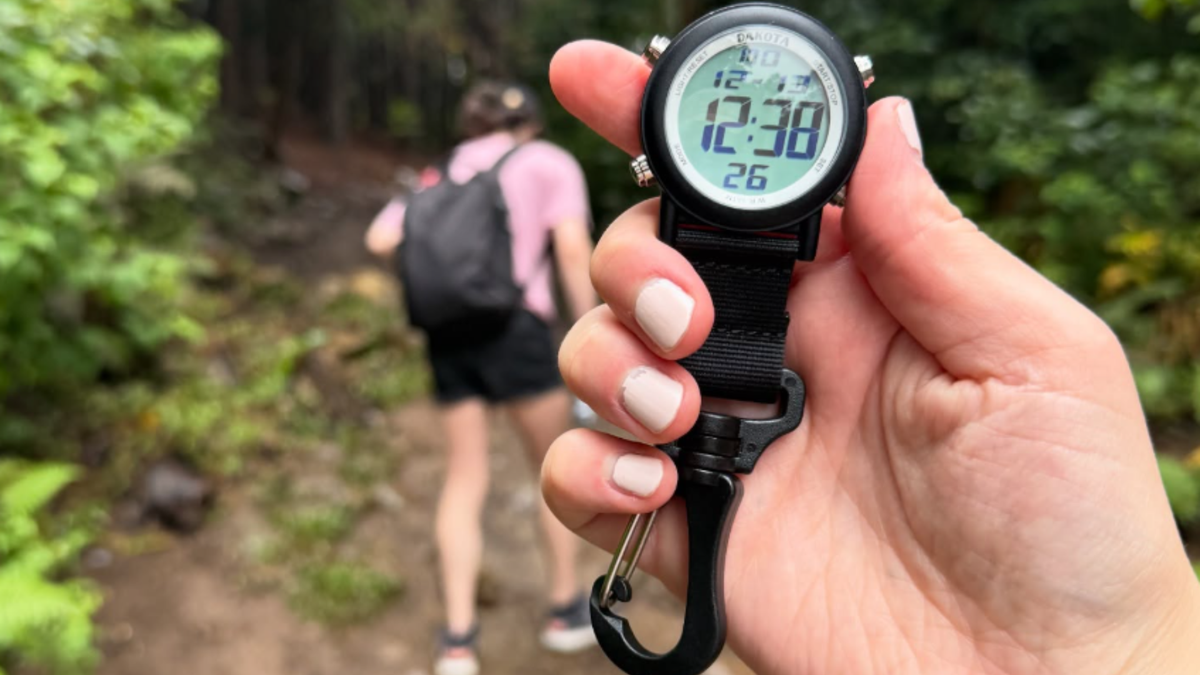
Hanging clip watches attach to curtain rails, overhead straps, carabiner loops, gear hooks, or cabinet handles. They're visible from multiple angles without requiring a dedicated mounting surface. In a converted camper van where every square inch of wall space serves multiple purposes, that flexibility matters.
The best clip watches for camper van cabin use share a few practical qualities:
-
Legibility at a glance. Large, high-contrast dials—ideally with luminous hands—mean you can read the time from your sleeping bag without reaching for your phone.
-
Battery-free or long-battery operation. Solar-powered clip watches or mechanical wind-up models eliminate the need for button cell replacements on the road.
-
Compact and lightweight. A watch that clips into your van setup shouldn't add bulk or require tools to install or move.
-
Temperature resilience. Vans experience dramatic temperature swings. A watch rated for outdoor conditions handles those extremes without losing accuracy.
Portable timekeeping solutions like these are particularly useful during the transition period when new van dwellers are still building habits. Having a visible, reliable clock in your living space reduces the reflexive phone-check habit that quietly drains battery throughout the day.
Why Multi-Tool Watches Make Sense for Van Repairs and Outdoor Adventures
Van life isn't just about the drive. It's about the trail after the drive, the roadside repair mid-route, and the impromptu camp setup when you pull off at dusk. A multi-tool watch for outdoor adventures acknowledges that your wrist is always with you, even when your toolkit is buried under a bed platform.
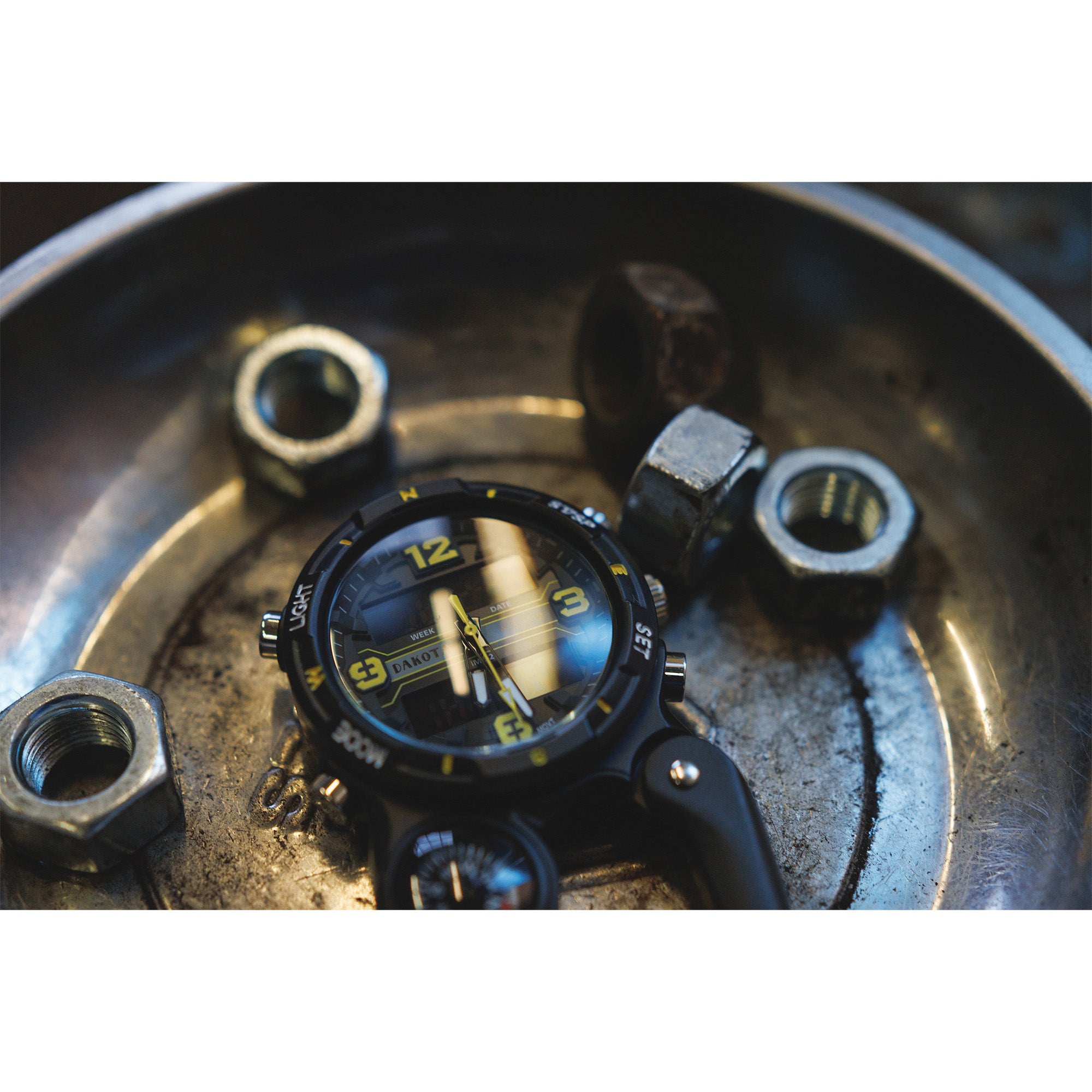
Multi-tool watches integrate practical functions alongside timekeeping. Common features include:
-
Altimeters and barometers for reading weather patterns and elevation—critical for mountain camping
-
Compasses for navigation when the phone's GPS loses signal
-
Built-in tools such as small screwdrivers, bottle openers, or hex wrenches are embedded in the band or case.
-
Durable construction with scratch-resistant crystals and shock-resistant cases built for the kind of daily abuse van life delivers
For quick van repairs—tightening a loose cabinet hinge, adjusting a roof vent, or fiddling with electrical connections—having a screwdriver on your wrist sounds gimmicky until the moment it saves you digging through a gear bin while pulled over on a dirt road.
Rugged clip watches for nomads occupy a slightly different niche. Rather than being worn on the wrist, they clip directly to a belt loop, backpack strap, or gear loop, making them accessible during active use without the risk of scratching a watch face against rock faces or van bodywork.
The best watches for van dwellers balance durability with genuine utility. A watch rated to military MIL-SPEC standards (MIL-STD-810G or its successor MIL-STD-810H) has been tested against shock, vibration, humidity, altitude, and temperature—conditions that closely mirror the demands of full-time van travel.
How to Choose the Right Off-Grid Timekeeping Setup for Your Van
The right combination depends on how you use your van and where you spend most of your time.
Choose a cabin clip watch if your priority is having a reliable, always-visible clock in your living space that doesn't require phone interaction and doesn't draw from your battery bank.
Choose a multi-tool watch for outdoor adventures if you regularly leave your van for hiking, climbing, or backcountry travel and want timekeeping plus navigation tools on your wrist.
Choose a rugged clip-on watch for travelers if you prefer keeping your wrists free during physical activity but want a durable timepiece accessible on a pack or belt.
Many experienced van dwellers end up with both—a cabin clock clipped near the sleeping area and a rugged clip watch or multi-tool watch for time spent outside the van. The combination covers the two distinct contexts of van life: living inside a small, mobile space and exploring the landscape outside it.
The unifying logic across all three is the same: reduce phone dependency, preserve battery life, and choose tools that work reliably in outdoor conditions.
Simplify Your Nomadic Lifestyle With the Right Tools
Van life has a way of clarifying what actually matters. The first few weeks strip away habits built around unlimited electricity, stable indoor temperatures, and always-available connectivity. What's left are the tools that genuinely earn their place.
Off-grid timekeeping is a small thing. But small things accumulate. Every reduction in phone dependency extends your battery life, simplifies your mornings, and removes one more point of friction from days that are already full of improvisation.
A clip watch for van life—whether used as a camper van cabin clock or clipped to a pack for trail use—is one of the most practical and underrated additions to a converted camper van setup. A multi-tool watch adds another layer, turning a timekeeping device into a legitimate piece of van life gear.
The nomadic lifestyle rewards people who think carefully about what they carry and why. Off-grid living accessories that do more with less aren't just smart purchasing decisions. They reflect the broader mindset that makes full-time van life sustainable.
Frequently Asked Questions
What is the best type of watch for off-grid van life?
The best watch for off-grid van life depends on your primary use case. For in-van timekeeping, a solar-powered or mechanical clip watch is ideal—it draws no power from your battery bank and stays visible without checking your phone. For outdoor activities, a multi-tool watch with altimeter, barometer, and compass functions provides practical value beyond timekeeping.
How does a clip watch work as a camper van cabin clock?
A clip watch attaches to rails, hooks, straps, or carabiner loops inside your van using a built-in clip or clasp. This lets you mount it in a visible location—near your sleeping area or kitchen setup—without screws or permanent fixtures. Because it moves easily, you can reposition it as your van layout changes.
Are battery-free watches reliable enough for full-time van travel?
Yes. Modern mechanical watches and solar-powered watches are highly reliable for van life. Mechanical watches require periodic winding but have no battery dependency at all. Solar-powered watches recharge from ambient light and can run for months in low-light conditions on a full charge. Both are well-suited to the demands of full-time travel.
What features should I look for in a multi-tool watch for van repairs?
Look for durable construction (shock-resistant, water-resistant), integrated tools such as screwdrivers or hex keys, and a watch rated to MIL-SPEC standards for temperature and vibration resistance. Navigation features like a compass and altimeter add value if you spend time hiking or in remote locations.
How do I reduce phone battery drain during extended off-grid stays?
Replace routine phone checks with dedicated off-grid timekeeping tools—a cabin clip watch for in-van use and a rugged wrist or clip-on watch for outdoor use. Reducing the frequency of phone screen activations meaningfully extends battery life, especially during multi-day stays without access to shore power or consistent solar generation.