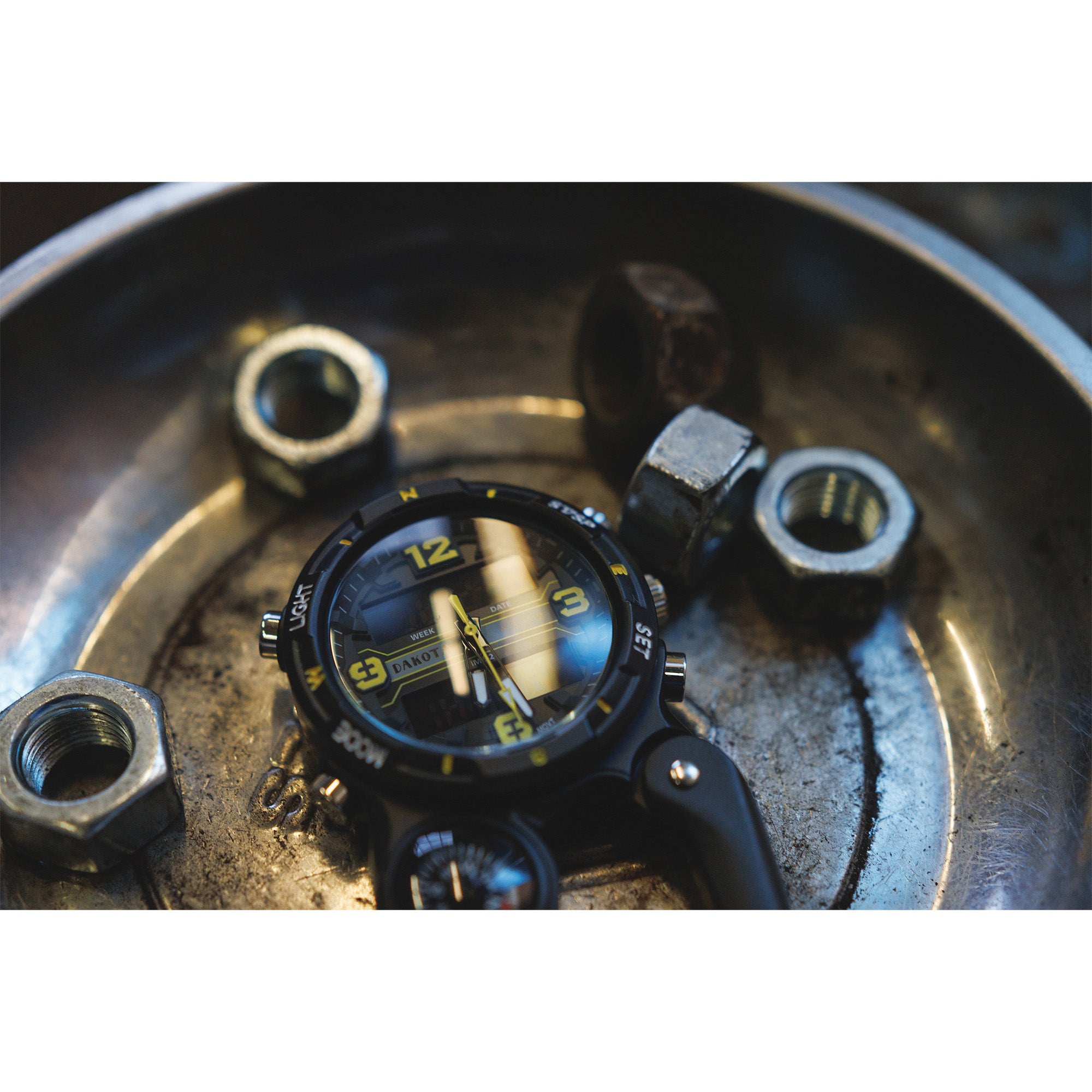

The best watch for bouldering is lightweight, scratch-resistant, and easy to clip onto a chalk bag or harness instead of your wrist. Polycarbonate models, like Dakota's clip watches, keep weight low and protect your wrists during demanding climbs—so you can focus on your grip, not your gear.
Bouldering looks simple from the ground. No ropes, no harness, just you and a short, powerful route called a problem. But anyone who's spent an afternoon on the wall knows the truth: bouldering is one of the most physically demanding forms of climbing. It puts serious strain on your fingers, forearms, and—crucially—your wrists.
That's why gear choices matter, even the small ones. A bulky watch can dig into your wrist during a mantle, snag on a hold, or get scratched to pieces against the rock. The right timepiece, on the other hand, stays out of your way entirely.
This guide breaks down what to look for in a climbing watch, why traditional models often fail on the wall, and how a lightweight, clip-on design can protect your wrists while keeping time. If you're building out your rock climbing gear and wondering where a watch fits in, here's everything you need to know.
Why do traditional watches get scratched while bouldering?
Granite, sandstone, and even textured indoor holds are abrasive by design. They need to be—friction is what keeps your hands and feet on the wall. Unfortunately, that same friction is brutal on a standard watch.
Most everyday watches use mineral glass or metal casings that aren't built for repeated contact with rough surfaces. Press your wrist against a slab or jam your hand into a crack, and you'll hear that unmistakable grind. Within a few sessions, the crystal is covered in micro-scratches, and the bezel looks like it lost a fight.
There's a practical problem, too. A rigid watch case sits between your wrist and the rock. During moves that demand a flat palm or a deep wrist flex—think mantles, gastons, or topping out—that hard edge presses into your skin. It's uncomfortable at best and a distraction at worst.
A scratch-resistant watch built for bouldering solves both issues. Tougher materials shrug off contact with the rock, and a low-profile design keeps the case from interfering with your movement. This is exactly where Dakota's climbing-focused features stand out: the watches are designed to take a beating without adding bulk to your wrist.
How do you attach a clip watch to a chalk bag?
Here's a trick experienced climbers swear by: don't wear your watch at all. Clip it instead.
A clip watch attaches directly to your chalk bag, harness loop, or backpack zipper using a small carabiner-style clip. This keeps the watch close enough to check at a glance while removing it from your wrist entirely. The benefit is obvious once you try it—no pressure points, no scratches from wall contact, and nothing flexing against your skin during hard moves.
Attaching one is simple:
-
Find a secure loop. Most chalk bags have a brush holder, drawstring, or webbing loop that's perfect for clipping.
-
Clip the watch face outward. Position it so you can read the time without unclipping.
-
Check that it sits flush. You don't want it swinging into the wall or catching on the holds.
The best clip watch for climbers is one that's light enough to forget it's there. When your chalk bag already carries your most-used gear, adding a watch that weighs next to nothing makes perfect sense. Dakota's chalk bag clip design was built with this exact workflow in mind, so the watch travels with you from problem to problem without ever touching your wrist.
What makes a lightweight polycarbonate watch ideal for climbing?
Weight is everything in bouldering. Every gram you carry is a gram your forearms have to manage on an overhang. That's why the material of your watch matters more than you'd expect.
Polycarbonate is a lightweight, impact-resistant plastic used in everything from safety goggles to aircraft components. For a climbing watch, it offers a rare combination of benefits:
-
Low weight. A polycarbonate case can weigh a fraction of a metal one, which is ideal when you're clipping it to gear or wearing it on long approach hikes.
-
Impact resistance. Drop your watch on the gym floor or knock it against a boulder, and polycarbonate flexes instead of cracking.
-
Scratch resistance. Quality polycarbonate models resist the surface abrasion that destroys traditional crystals.
A Dakota polycarbonate watch checks all three boxes. The lightweight build makes it a natural fit for both indoor bouldering and outdoor rock climbing, and the durable construction means it holds up session after session. For climbers comparing options, a lightweight watch that resists scratches and survives drops covers nearly every demand the sport throws at it.
Indoor bouldering vs. outdoor climbing: does the watch change?
The core needs stay the same—lightweight, durable, easy to access—but the environment shifts the priorities slightly.
For indoor bouldering, scratch resistance and a clip-on design matter most. Gym holds are textured and unforgiving, and you'll be checking the time between burns on a problem. A clipped watch keeps your wrists clear for repeated attempts.
For outdoor rock climbing, durability and weight take center stage. You're hiking to the crag, dealing with sun and grit, and putting your gear through harsher conditions. A rugged, lightweight polycarbonate watch handles the approach and the climb without weighing down your pack.
Choose a clip-on polycarbonate model if you split your time between the gym and the crag—it adapts to both without compromise.
Build your kit around function, not flash.
Bouldering rewards simplicity. The less you have to think about your gear, the more energy you can pour into reading the route and executing the moves. A watch should never be something you fight against.
The takeaway is straightforward: pick a watch that's lightweight, scratch-resistant, and easy to clip out of the way. Protect your wrists, skip the scratched-up crystal, and keep your focus where it belongs—on your grip and the next hold.
If you're putting together your rock climbing gear essentials, a Dakota clip watch is a small addition that earns its place. Lightweight polycarbonate construction, climbing-friendly features, and a chalk bag clip make it one of the easiest upgrades for any climber to make.
Frequently asked questions
What is the best watch for bouldering?
The best watch for bouldering is lightweight, scratch-resistant, and clips onto your chalk bag or harness rather than your wrist. Polycarbonate clip watches, like those from Dakota, meet all these needs while protecting your wrists during demanding moves.
Why should climbers use a clip watch instead of a wristwatch?
A clip watch removes the watch from your wrist, eliminating pressure points, scratches from wall contact, and any case that flexes against your skin during hard moves. It clips to your chalk bag for a quick glance at the time.
Is a polycarbonate watch durable enough for rock climbing?
Yes. Polycarbonate is impact-resistant and scratch-resistant, so it flexes instead of cracking when dropped and resists the surface abrasion that ruins traditional watch crystals. This makes it well-suited to both indoor and outdoor climbing.
Does a watch really protect your wrists while bouldering?
A bulky wrist-worn watch can dig into your wrist during mantles and flexion-heavy moves. By clipping a lightweight watch to your gear instead, you remove that hard edge from your wrist and keep it free to move naturally.
What should I look for in a rock climbing watch?
Prioritize low weight, scratch resistance, impact resistance, and a clip-on design. These features keep the watch out of your way, protect it from the rock, and let you check the time without it interfering with your climbing.