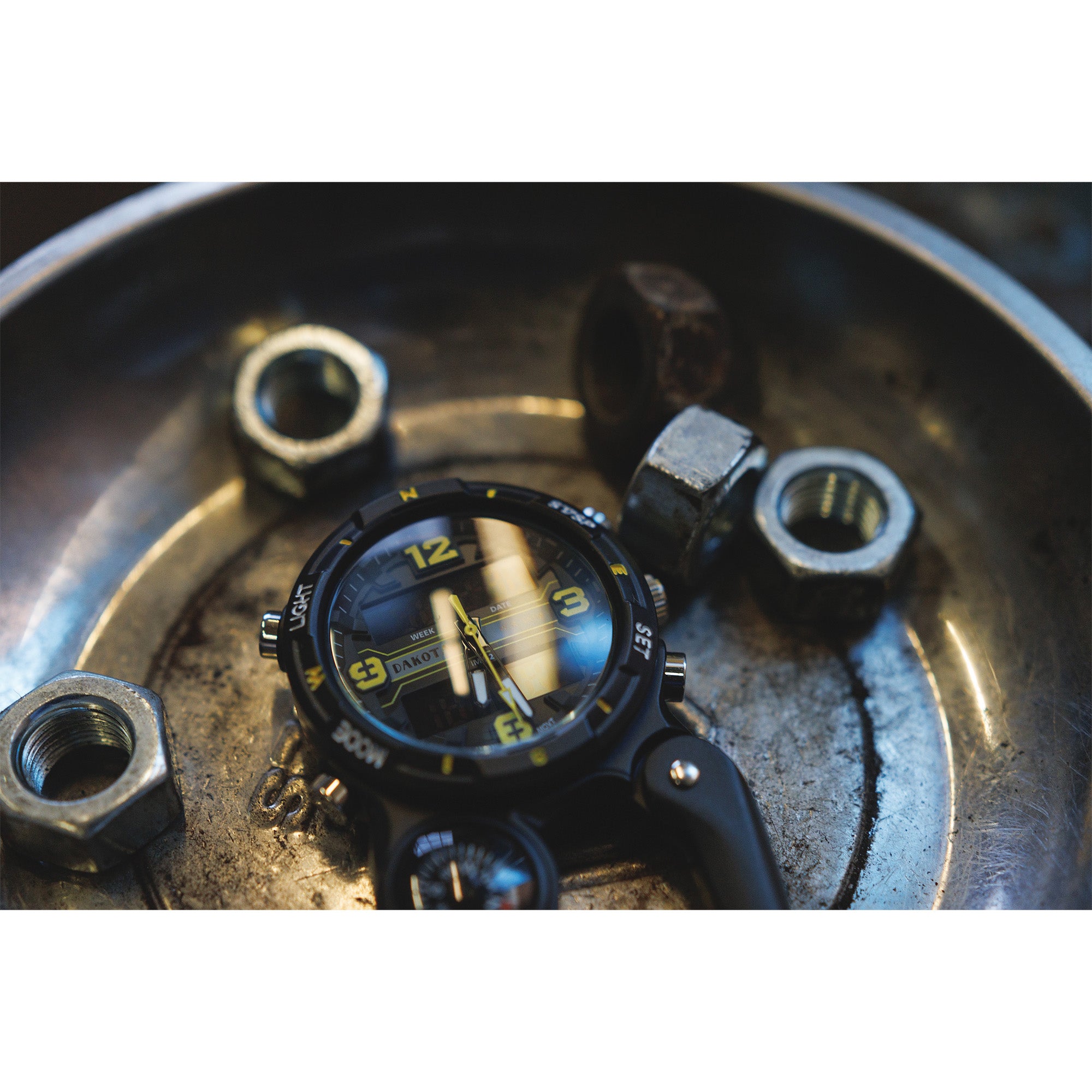

Dog sledding, or mushing, is one of the oldest winter travel methods, relying on a musher's ability to manage rest intervals, gear, and timing to keep the sled dog team safe and efficient. A durable, mitten-friendly watch with an oversized carabiner clip, like the Dakota watch, helps mushers track time accurately without removing their gloves in subzero conditions.
Long before snowmobiles and heated cabins, dog sledding was the primary way people crossed frozen, roadless terrain. Indigenous Arctic communities developed mushing not as a sport, but as a necessity—moving supplies, hunting parties, and messages across distances that would otherwise take days on foot. Today, dog sledding still holds that same spirit. Mushers and their teams travel across snow-covered wilderness, relying on timing, teamwork, and the right gear to make it through.
Anyone who's tried mushing knows that success isn't just about the dogs. It's about the musher's ability to read the trail, manage the pack's energy, and operate gear efficiently in freezing temperatures. This post breaks down how experienced mushers time their runs, handle gear with heavy mittens, and rely on accessories like the Dakota watch's oversized carabiner clip to stay on schedule in the cold.
How do mushers manage rest intervals for sled dog teams?
Rest intervals are one of the most important parts of dog sledding. Sled dogs are athletes, and like any athlete, they perform best when exertion and recovery are properly balanced. Mushers typically break long routes into segments, alternating between running intervals and planned rest stops to prevent exhaustion and injury.
The length of each interval depends on several factors:
-
Distance and terrain: Flat, groomed trails allow for longer running intervals, while hilly or deep-snow terrain requires more frequent breaks.
-
Weather conditions: Colder temperatures can actually help dogs run longer without overheating, but extreme cold increases the risk of frostbite during rest stops.
-
Team experience: Younger or less-conditioned teams need shorter running intervals and longer recovery time compared to seasoned teams.
During long-distance expeditions or races, mushers often follow a rhythm of running for a set number of hours, then resting for a proportional amount of time. This is where accurate timekeeping becomes critical. Misjudging an interval by even 15–20 minutes can mean the difference between a well-rested team and one that's pushed too hard. That's why dog sledding gear essentials for mushers almost always include a reliable, easy-to-read watch that can be checked mid-run without disrupting momentum.
Why is operating gear with heavy mittens a challenge for mushers?
Anyone who has tried to text, tie a knot, or check a watch while wearing thick winter gloves knows the frustration firsthand. For mushers, this challenge is amplified. Subzero temperatures mean mittens aren't optional. Exposed skin can suffer frostbite within minutes in extreme Arctic conditions, so removing gloves to check gear simply isn't a safe option.
This creates a real problem when it comes to timekeeping. Many standard watches require precise finger movements to adjust settings or press small buttons. A musher wearing bulky mittens can't easily operate these without stopping, removing a glove, and exposing their hands to the cold.
That's why glove-compatible watches have become such a valuable piece of winter sports equipment. A mitten-friendly watch for cold weather mushing should have a few specific features:
-
Large, legible dials that can be read at a glance without needing to squint or remove headwear
-
Simple, tactile controls that can be operated with gloved hands
-
A secure attachment method that doesn't rely on small buckles or clasps
This last point is especially important, and it's where a lot of standard watch designs fall short.
What makes an oversized carabiner clip ideal for winter sports?
Traditional watch straps, with their small buckles and thin leather or metal bands, aren't designed for extreme cold-weather use. Fumbling with a tiny buckle while wearing thick mittens can waste precious time and expose skin to the cold.
This is where Dakota's oversized carabiner clip offers a practical solution. Instead of a conventional strap, the Dakota watch uses a large, easy-to-grip carabiner clip, similar to those used in climbing and outdoor gear. Mushers can clip the watch directly onto a jacket zipper, harness strap, or sled bag—no fine motor skills required.
This design solves several problems at once:
-
Accessibility: The oversized clip watch for heavy winter gloves can be attached or removed in seconds, even with mittens on.
-
Durability: A metal carabiner clip is far less likely to snap or wear out compared to a traditional leather or fabric strap, which matters during long-distance travel across harsh terrain.
-
Flexibility: Mushers can position the watch wherever it's most convenient, whether that's on a jacket, sled, or harness, rather than being limited to wrist placement.
For mushers managing tight rest intervals in subzero conditions, having a durable watch for subzero winter expeditions that can be checked quickly and attached securely is a small detail that makes a big difference. A Dakota carabiner watch for extreme cold isn't just a convenience. It is a functional part of a musher's gear checklist, standing alongside sled harnesses, cold-weather boots, and insulated outerwear as essential equipment.
Leading the pack through the snow
Dog sledding is a sport of patience and partnership. It rewards those who understand their team, respect the terrain, and prepare for the unpredictability of winter weather. Timing is at the heart of all of it. Knowing when to push the pace and when to call for rest can mean the difference between a smooth, successful run and an exhausted team stranded far from camp.
Accessible timekeeping for dog sled expeditions isn't just a nice-to-have. It's part of responsible, informed mushing. An analog watch for traditional winter travel, built with mitten-friendly controls and a secure oversized clip, lets mushers stay focused on their team instead of fumbling with frozen gear.
Whether you're training for a long-distance race or planning a weekend mushing trip, building a dog sledding accessories and gear checklist that accounts for Arctic-specific challenges will serve your team well. Start with the basics: a well-fitted harness, cold-rated boots, and a reliable watch designed for the cold, like the Dakota watch. From there, trust your training, respect your dogs' limits, and let the timing guide the way.
Frequently Asked Questions
How often should mushers rest their sled dog teams during a run?
Rest frequency depends on distance, terrain, and the team's conditioning level, but most mushers alternate running and resting in planned intervals, often ranging from a few hours of running followed by shorter rest breaks. Teams on long expeditions adjust these intervals based on weather and dog fatigue.
What should I look for in a watch for dog sledding?
The best watch for dog sledding adventures should have a large, easy-to-read face, simple tactile controls for use with gloves, and a secure attachment method, such as an oversized carabiner clip, that doesn't require fine motor skills to operate.
Why can't mushers use a regular wristwatch with mittens?
Most standard watches have small buckles and buttons that require precise finger movement to operate. Mushers often can't remove their mittens in subzero temperatures without risking frostbite, so they need a glove-compatible watch for Arctic conditions.
Is the Dakota watch suitable for other winter sports besides mushing?
Yes. The Dakota watch's oversized carabiner clip and mitten-friendly design make it a practical choice for other cold-weather activities, including skiing, snowshoeing, and ice fishing, where quick, glove-friendly timekeeping matters.
What else should be on a dog sledding gear checklist?
Beyond timekeeping gear, mushers should pack insulated clothing, a cold-rated sled harness, emergency supplies, and sled dog mushing gear suited for long-distance travel, such as dog booties and extra food for the team.