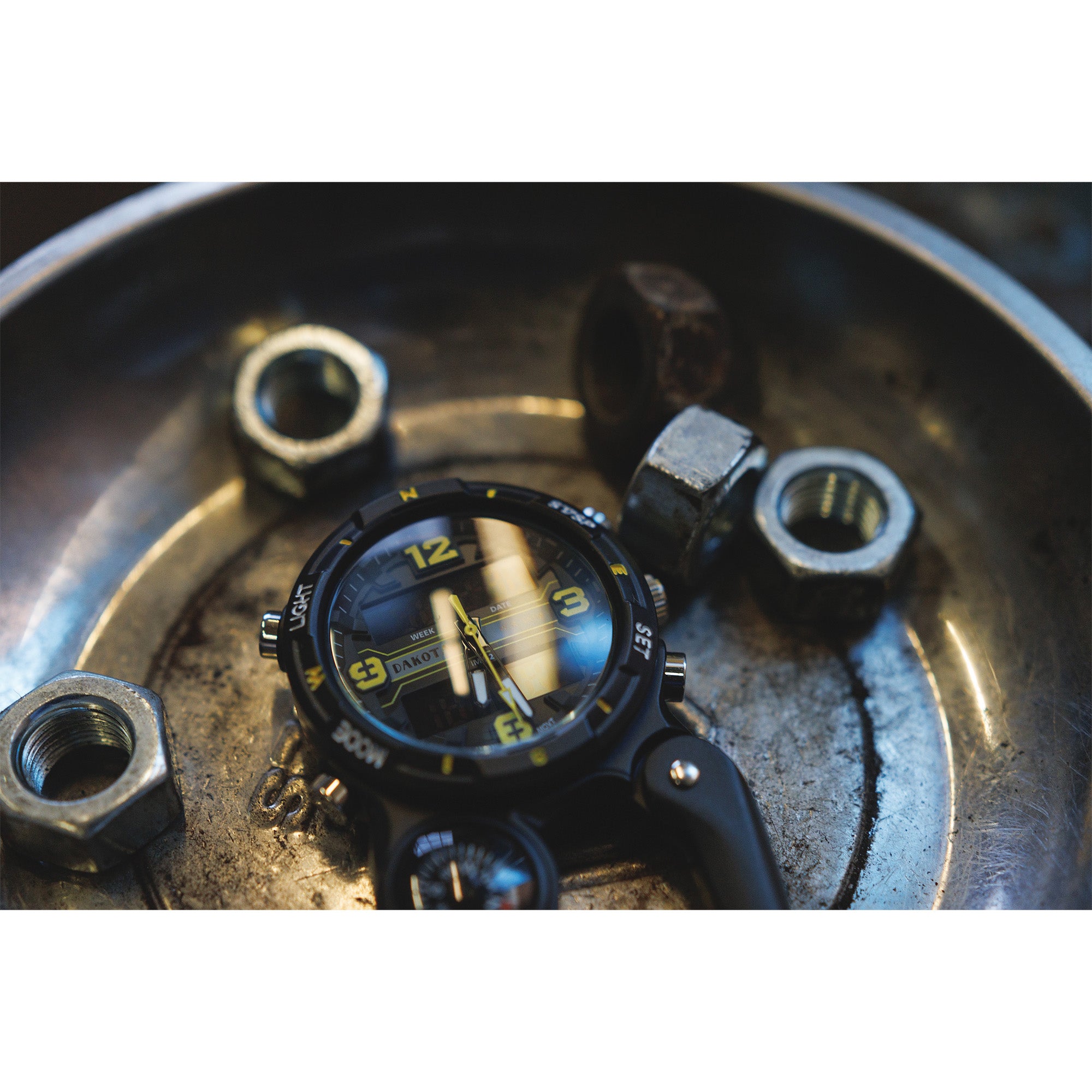

Ice climbing gear must protect against sharp tools, sub-zero temperatures, and low-light conditions. Essential equipment includes wrist-safe ice axes, harness-mounted watches for tracking pace and weather windows, and watches with luminescent dials for visibility in dark ravines. A durable, climbing-specific watch like the Dakota ice climbing watch rounds out a kit built for frozen waterfalls and winter mountaineering.
Scaling a frozen waterfall demands a level of focus that few other sports require. Every swing of the ice axe, every kick of a crampon, has to be deliberate. One miscalculation and a climber can lose their grip, their balance, or worse. This intensity is part of what draws people to ice climbing in the first place. But it also means gear selection isn't just about comfort. It's about survival.
Ice climbing accessories essentials go far beyond a solid pair of boots and a reliable axe. Climbers need to think about wrist protection, time management, and visibility — three factors that often get overlooked until they become a problem mid-climb. This guide breaks down the essential equipment every ice climber should have, with a focus on gear that keeps hands safe, time on track, and eyes sharp in low light.
Why do ice axes pose a wrist injury risk during climbs?
Ice axe technique relies on repetitive, forceful swings into solid ice. When an axe doesn't stick on the first attempt — which happens often, even to experienced climbers — the tool can bounce back unpredictably. Without proper wrist protection, this recoil can strain or injure the wrist joint.
Many climbers wear wrist leashes to prevent dropping their tools, but leashes alone don't solve the bigger problem: repeated impact and torque on an exposed wrist. This is also why wristwear matters more than most climbers realize. A bulky or poorly secured watch can catch on an axe strap, shift during a swing, or dig into the skin at the worst possible moment.
Choosing a low-profile, durable watch for ice climbing isn't a style decision — it's a safety one. Look for:
-
A snug, adjustable band that won't slide during repetitive motion
-
A reinforced case that can handle impact without cracking
-
A slim profile that won't interfere with glove grip or axe straps
Climbers who ignore this detail often find themselves adjusting gear mid-pitch, which breaks concentration at exactly the wrong time.
What should climbers look for in a harness-mounted watch?
Timekeeping on a frozen waterfall isn't about punctuality. It's about managing exposure. Cold temperatures, shifting weather, and limited daylight hours mean climbers need to know exactly how long they've been on the ice and how much time remains before conditions turn.
A harness-mounted watch solves a problem that wrist-worn watches can't: accessibility without disruption. Checking a wrist watch mid-climb often means letting go with one hand, which isn't always safe depending on the pitch. A watch clipped to the harness keeps time visible at a glance, without forcing a climber to break form.
This matters most during winter mountaineering, when weather windows can close fast. A climber who loses track of time risks descending in the dark, in a whiteout, or in temperatures that drop sharply after sunset. Harness-mounted timekeeping gives climbers a quick reference point without adding risk to their movement.
When shopping for this kind of setup, prioritize:
-
A secure carabiner clip or loop attachment
-
A face that's easy to read at a glance, even with gloves on
-
Shock resistance, since harness-mounted gear takes hits against rock and ice
Why does a luminescent dial matter in dark ravines?
Ice climbing often happens in conditions where natural light is limited — deep ravines, overcast skies, or early morning starts before sunrise. In these environments, a standard watch face becomes nearly impossible to read.
A luminescent watch dial solves this by staying visible without needing an external light source. This isn't a minor convenience. When a climber is deep in a frozen gorge, with walls blocking what little daylight exists, being able to check the time without stopping to dig out a headlamp makes a real difference in both pace and safety.
The best luminescent dials maintain visibility for hours after their last exposure to light, which matters on longer climbs that start before dawn or stretch into dusk. Some outdoor adventure watches also include backlit displays as a secondary feature, giving climbers a backup option if ambient light runs out entirely.
For climbers choosing between watch features, the decision often comes down to this: if your climbs regularly start or end in low light, a luminescent dial is non-negotiable. If you only climb in full daylight on short routes, it's a nice-to-have rather than a necessity.
What makes a watch durable enough for ice climbing conditions?
Not every outdoor watch can handle the demands of frozen waterfall climbing. Extreme cold, moisture, and repeated impact all take a toll on standard wristwear. A few features separate a climbing-ready watch from a casual outdoor one:
-
Cold-rated materials: Some watch components become brittle or inaccurate in sub-zero temperatures. Look for models rated for extreme cold.
-
Water and ice resistance: Melting ice and snow exposure are constant on a climb, so a water-resistant seal is essential.
-
Shock-resistant casing: Between axe swings, falls, and harness mounting, a watch needs to survive repeated impact without losing function.
The Dakota ice climbing watch is one example built with these conditions in mind, combining a rugged case with cold-weather reliability — the kind of durable watch for ice climbing that holds up when the swings get rough and the temperatures drop fast.
Conquer the ice with unobstructed movement.
Ice climbing rewards precision, and precision depends on gear that works with the climber instead of against them. Wrist protection, accessible timekeeping, and visibility in low light aren't optional extras. They're part of what keeps a climb moving smoothly from the first swing to the final pitch.
Before heading out to a frozen waterfall, take a hard look at your gear setup. Does your watch stay out of the way during an axe swing? Can you check the time without breaking form? Can you read your dial in a dark ravine without fumbling for a headlamp? If the answer to any of these is no, it's worth upgrading before your next climb. Unobstructed movement starts with gear that's built for the ice, not just borrowed from another sport.
Frequently Asked Questions
What gear is essential for ice climbing?
Essential ice climbing gear includes crampons, ice axes, a climbing harness, helmet, and layered cold-weather clothing. Beyond the basics, climbers also need wrist-safe wristwear, a reliable way to track time, and visibility tools like luminescent dials for low-light conditions.
Why is wrist protection important during ice climbing?
Ice axe swings create repeated impact and recoil on the wrist. Without proper protection, this can lead to strain or injury. A low-profile, securely fitted watch also reduces the risk of snagging on axe straps during a swing.
Is a harness-mounted watch better than a wrist watch for climbing?
A harness-mounted watch allows climbers to check the time without letting go of their tools or breaking their climbing form, which wrist watches often require. This makes harness mounting a safer option for tracking time during technical pitches.
How long do luminescent watch dials stay visible in the dark?
This varies by model, but quality luminescent dials typically remain visible for several hours after their last light exposure, which is enough to cover most dawn or dusk climbing windows.
What makes a watch suitable for extreme cold climbing conditions?
A climbing-ready watch should use cold-rated materials, maintain water and ice resistance, and include a shock-resistant casing to withstand impact from axes, falls, and harness mounting.