
Winning a deep-sea fishing battle depends on precise timing—knowing when to rest, when to reel, and when to clip in. Anglers need gear built for offshore chaos: waterproof watches rated for high ATM resistance, secure clip attachments for fighting chairs or belts, and shockproof durability that survives saltwater, sudden swells, and hours-long battles with big game fish.
Big game fishing rewards patience and punishes exhaustion. When a marlin or tuna takes the bait, the fight that follows can stretch from a few intense minutes to several grueling hours. Every second matters, and so does every piece of gear strapped to an angler's body. A missed read on timing, a watch that fails in saltwater, or a loose clip that slips off a fighting belt can turn a potential catch into a frustrating loss.
This is why experienced offshore anglers treat their gear checklist with the same seriousness as their boat maintenance. Rods, reels, and line strength matter, but so does the smaller equipment that keeps a fisherman oriented and safe during the fight. Among the most overlooked deep-sea fishing gear essentials is a reliable, water-resistant watch—one built to survive the pressure, impact, and constant moisture of offshore conditions.
This post breaks down why timing the fight matters, what water resistance level anglers should look for, and how a secure clip system can make the difference between landing the big one and losing it at the boat.
Why Does Timing the Fight Prevent Angler Exhaustion?
Fighting a large fish is a battle of endurance, not just strength. Anglers who rush the fight often tire out before the fish does, leading to slack lines, missed hooksets, or an inability to finish the job. Timing the fight means knowing when to apply pressure and when to let the fish run, pacing the battle so the angler's energy outlasts the fish's resistance.
A dependable watch plays a bigger role in this than most anglers realize. Glancing at a wrist-mounted analog watch for open ocean conditions lets anglers track how long they've been engaged, helping them decide when to rotate positions, hydrate, or call for help from a mate. This kind of split-second decision-making is one reason experienced offshore crews treat timekeeping gear for offshore anglers as a non-negotiable part of their setup, not an afterthought.
Fatigue management also protects against injury. Long fights put repetitive strain on the shoulders, back, and forearms. Anglers who track elapsed time can set mental checkpoints—for example, reassessing grip and stance every 10 minutes—rather than fighting blind until their body gives out first.
What Water Resistance Rating Do Offshore Anglers Need?
Saltwater, spray, and the occasional dunking are constants on a deep-sea fishing trip. Standard water-resistant watches—rated for splashes or brief submersion—don't hold up to the repeated soaking and pressure changes that come with offshore fishing. This is where high ATM water resistance becomes critical.
ATM (atmosphere) ratings indicate how much pressure a watch can withstand before water resistance fails. For context:
-
5 ATM (50 meters): Suitable for swimming or light splashes, but not reliable for sustained offshore exposure.
-
10 ATM (100 meters): A safer baseline for anglers who expect regular saltwater contact.
-
20 ATM (200 meters) or higher: Ideal for serious offshore conditions, including diving, heavy spray, and accidental submersion during a fight.
Anglers searching for the best waterproof watch for offshore fishing should prioritize models with at least 10 ATM resistance, though 20 ATM or higher offers extra peace of mind during rough seas. A high ATM water resistance watch for diving is also a smart crossover choice, since many offshore anglers combine fishing trips with snorkeling or light diving.
Beyond water resistance, durability matters just as much. A shockproof waterproof watch for sea fishing needs to withstand sudden impacts—like being knocked against a fighting chair or rod holder—without the internal mechanism failing. Choose a shockproof, high-ATM watch if the trip involves rough seas or extended fights; a standard water-resistant model may suffice only for calmer, shorter outings.
How Should Anglers Secure a Watch During a Fight?
A watch is only useful if it stays put during the fight. Deep-sea fishing involves sudden jerks, lunges, and constant movement, all of which can knock a loose watch off an angler's wrist or send it flying across the deck. This is why many offshore anglers prefer a clip-style watch that attaches directly to a fighting belt or chair rather than relying solely on a wrist strap.
A secure clip watch for deep-sea conditions offers a few practical advantages:
-
Stability during movement: A clip watch for a fishing belt or fighting chair stays fixed in place, even during aggressive rod work.
-
Visibility: Mounting a watch at chest or waist height, rather than the wrist, often makes it easier to glance at mid-fight without breaking grip on the rod.
-
Reduced loss risk: A fighting chair clip watch for sport fishing is far less likely to be ripped off during a sudden fish run compared to a standard wrist strap.
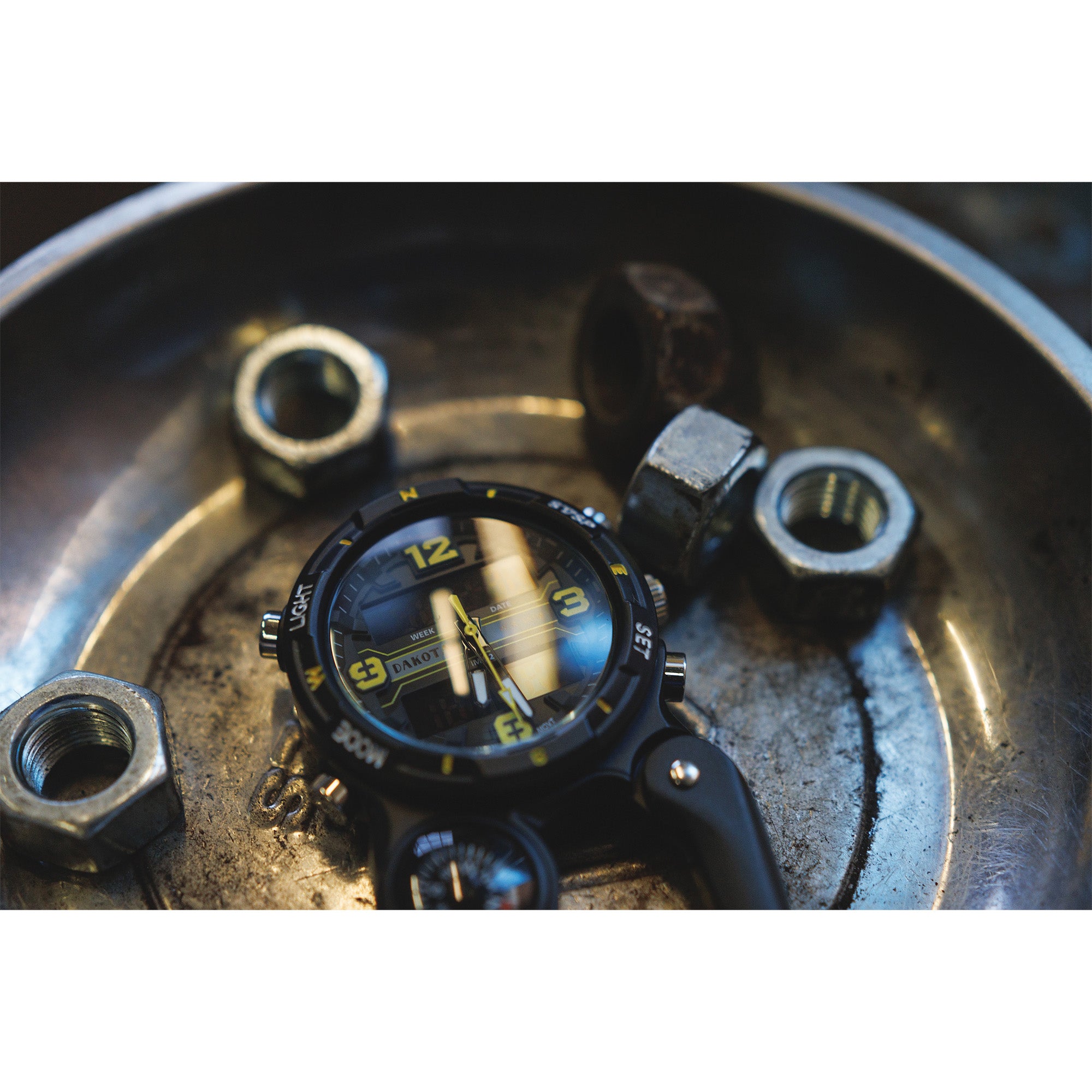
Brands like Dakota have built a reputation among offshore anglers for producing rugged, clip-compatible watches designed with these demands in mind. A Dakota watch for offshore fishing adventures typically combines analog reliability with the water resistance and shock durability needed for hours-long battles at sea.
What Else Belongs on a Deep Sea Fishing Accessories Checklist?
A reliable watch is just one part of a complete offshore setup. A thorough deep-sea fishing accessories checklist should also include:
-
Polarized sunglasses to cut glare and spot fish beneath the surface
-
Fighting gloves to protect hands from line friction
-
A durable, water-resistant watch for saltwater fishing with secure clip options
-
Non-slip deck boots for stability during a fight
-
A dry bag for electronics and spare gear
Each item plays a role in helping anglers stay focused, protected, and ready for whatever the ocean throws at them.
Land the Big One With Precision Timing
Deep-sea fishing rewards preparation as much as skill. The anglers who consistently land big game fish aren't necessarily the strongest on the boat—they're the ones who manage their energy, track their time, and trust their gear to perform under pressure.
A durable, high ATM water-resistant watch with a secure clip system won't guarantee a catch, but it removes one more variable from an already unpredictable fight. Before the next offshore trip, take a hard look at the gear checklist. If the watch on that list can't handle saltwater, shock, or a secure clip-in, it might be time for an upgrade.
Frequently Asked Questions
What is the best watch for big game offshore fishing?
The best watch for big game offshore fishing combines high ATM water resistance (10 ATM or higher), shockproof durability, and a secure clip or strap system. Analog watches are often preferred for their reliability and ease of reading in bright sunlight.
How long does a typical big game fish fight last?
Fight times vary widely depending on the species and fish size, ranging from a few minutes for smaller catches to several hours for large marlin or tuna. This is why timing and endurance management are critical skills for offshore anglers.
Why is a clip watch better than a wrist watch for fishing?
A clip watch attaches securely to a fighting belt or chair, reducing the risk of it being knocked loose during aggressive rod movements. It also allows anglers to check the time without adjusting their grip on the rod.
What ATM rating is safe for saltwater fishing?
A minimum of 10 ATM (100 meters) is recommended for regular saltwater exposure. Anglers facing rough seas or occasional submersion should consider 20 ATM or higher for added protection.
Are Dakota watches suitable for offshore fishing?
Dakota watches are known for combining rugged, shockproof builds with reliable water resistance, making them a popular choice among anglers looking for dependable timekeeping gear during offshore fishing adventures.