
Open with a vivid picture of the freedom of moto-camping—the open road, the wind, the minimalist thrill of carrying everything you need on two wheels.
-
Acknowledge the core challenge: unlike car camping, every item on a motorcycle trip needs to earn its place. Space is limited, conditions are unpredictable, and convenience matters more than ever when you're miles from the nearest town.
-
Briefly introduce the blog's focus: practical advice on moto-camping gear essentials for beginners, from saddlebag packing strategies to choosing the right timekeeping tools for the road.
-
Outline what readers will learn: how to pack efficiently, how to check the time without removing riding gloves, and how to gear up for unpredictable weather.
Section 1: Making the Most of Your Saddlebags
-
Explain the fundamental space challenge: saddlebags offer limited real estate, and overpacking can affect a motorcycle's balance and handling.
-
Introduce the "one in, one out" rule—every item must serve at least two purposes.
-
Share a practical moto-camping packing checklist, broken into categories: shelter, clothing, tools, nutrition, and accessories.
Provide saddlebag packing tips for moto-camping, such as:
-
Rolling clothes instead of folding them
-
Using compression dry bags to reduce bulk
-
Prioritizing flat, stackable items over bulky ones
-
Keeping frequently needed items (snacks, maps, rain gear) easily accessible
-
Highlight space-saving accessories for saddlebags—compact multi-tools, collapsible cookware, and ultralight tent options.
-
Include a suggested packing layout or visual checklist graphic.
Section 2: Telling the Time Without Taking Off Your Gloves
-
Set up the problem: traditional watches and phone screens are nearly impossible to use when you're wearing thick riding gloves, especially on long-distance routes.
-
Discuss why checking your phone mid-ride is both impractical and unsafe.
Introduce glove-friendly timekeeping solutions, focusing on:
-
Clip watches for motorcycle riders—compact, easily readable, and attachable to gear or handlebars.
-
Analog watches for motorcycle adventure travel—large dials and high-contrast faces for at-a-glance readability.
-
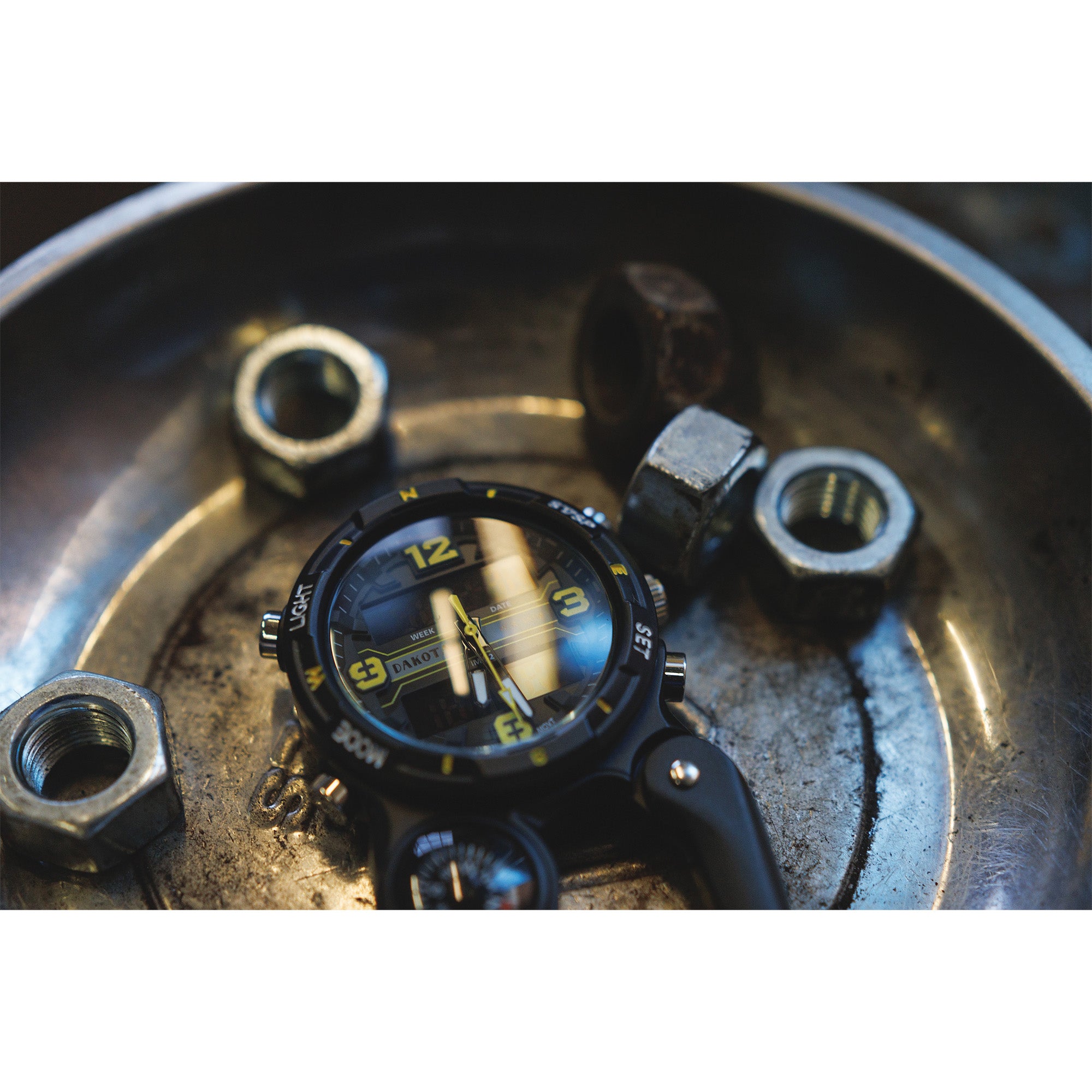
The Dakota watch for motorcycle camping trips is a specific example worth exploring
Outline what to look for in the best watch for motorcycle camping trips:
-
Large, legible dial
-
Easy clip or mounting system
-
Lightweight and low-profile design
-
Durability for outdoor conditions
-
Offer tips on how to check time with riding gloves on, such as mounting a clip watch to a tank bag or handlebar strap for quick, eyes-forward readability.
-
Emphasize compact timekeeping gear for motorcycle travel as an often-overlooked but essential part of any kit.
Section 3: Gearing Up for Whatever the Sky Throws at You
-
Describe the reality of long-distance motorcycle camping: weather changes fast, and being caught in a downpour without the right gear can turn an adventure into misery.
Discuss the importance of weatherproof gear selection across different categories:
-
Clothing: waterproof riding jackets, thermal base layers, and quick-dry fabrics
-
Shelter: lightweight, packable rain tarps and tents with strong wind ratings
-
Accessories: dry bags, waterproof phone cases, and sealed storage solutions
Deep-dive into waterproof watches for motorcycle riding and weatherproof watches for motorbike adventures:
-
Minimum water resistance ratings to look for (e.g., IP67 or 100m water resistance)
-
Why a durable watch for rain and outdoor conditions is a non-negotiable for moto-campers
-
How analog designs often outperform digital in wet, high-vibration environments
-
Briefly cover how to weatherproof your saddlebags and luggage, including internal dry bag liners and waterproof pannier covers.
-
Recommend gear layering strategies to stay warm and dry without overpacking.
Conclusion: Hit the Road, Ready for Anything
-
Recap the three pillars covered: smart packing, glove-friendly timekeeping, and weatherproof preparation.
-
Reinforce that the best gear for long-distance motorcycle camping isn't necessarily the most expensive—it's the most purposeful.
-
Reiterate the value of investing in compact timekeeping gear for motorcycle travel, particularly clip-on and analog options that work seamlessly with riding gloves.
-
Close with an encouraging call to action: whether you're planning your first overnight ride or your fiftieth, the right gear makes every mile more enjoyable.
-
Invite readers to explore our full range of moto-camping accessories and share their own tips in the comments.