
Fast triathlon transitions come down to three things: streamlined gear, quick-access timing tools, and practiced movements. Clipping a durable watch to your bike frame and using a digital stopwatch for lap pacing can shave critical seconds off your swim-to-bike and bike-to-run changeovers, directly improving your race day results.
Triathletes obsess over swim strokes, bike cadence, and running form. But the transition zone, often called the "fourth discipline," decides races just as often as raw speed does. The jump from water to pavement to pavement to pavement (well, bike to run) demands a different kind of fitness: organizational speed.
A poorly managed transition can cost a minute or more. Multiply that across two transition points, and sloppy gear management might add two to three minutes to your total race time. For competitive athletes, that's the difference between a podium finish and watching from the sidelines. For beginners, it's the difference between a confidence-building race and a frustrating one.
This guide breaks down how to shave seconds off your transition times, why clip-on watches to bike frames are standard gear for serious athletes, and how a reliable digital stopwatch for lap pacing triathlon training can sharpen your pacing strategy long before race day.
Why Do Transition Times Matter So Much in Triathlon?
Triathlon splits performance into five segments: swim, T1 (swim-to-bike transition), bike, T2 (bike-to-run transition), and run. Most athletes train hard for the three sport-specific segments and treat transitions as an afterthought. That's a mistake.
Elite triathletes often complete T1 and T2 in under a minute combined. Age-group athletes, by contrast, frequently spend two to four minutes total in the transition zone, not because they're slower swimmers or runners, but because they fumble with wetsuits, misplace gear, or waste time figuring out timing devices mid-race.
Treating transitions as a trainable skill, not an afterthought, is one of the fastest ways to improve your overall race time without adding a single extra mile of training.
How Can You Shave Seconds Off Triathlon Transition Times?
Improving transition speed is less about raw fitness and more about rehearsal and gear organization. Here's where most triathletes find their biggest time savings.
Lay Out Your Transition Zone Gear Checklist in Advance
Every item in your transition zone should have a fixed, memorized spot. A solid transition zone gear checklist for triathletes typically includes:
-
Wetsuit removal aid or lubricant
-
Bike shoes (clipped into pedals if permitted, or placed beside the bike)
-
Helmet, positioned on the aero bars for quick access
-
Sunglasses
-
Race belt with number already attached
-
Running shoes with elastic laces
-
Nutrition (gels, chews, or electrolyte tablets)
-
Timing device, clipped and ready.
Rehearsing your transition layout during training, not just on race morning, builds the muscle memory that separates smooth transitions from chaotic ones.
Practice Brick Workouts to Build Transition Muscle Memory
Brick workouts, back-to-back sessions like bike-to-run, train your body to adjust quickly between disciplines. They also give you repeated opportunities to practice the actual physical act of transitioning: changing shoes, adjusting gear, and starting your next segment's pacing strategy.
Choose a brick workout if your goal is race-specific conditioning, rather than general fitness. Running on fatigued, post-bike legs feels different, and only repeated practice prepares your body for it.
Minimize Decision-Making in the Transition Zone
Every second spent thinking is a second lost. Pre-set your gear, pre-plan your nutrition, and know exactly which item you reach for first. Athletes who rehearse their transition sequence mentally, not just physically, tend to move faster because they're not improvising under race-day adrenaline.
What's the Best Watch for Triathlon Transitions?
Choosing the right timing device matters more than most beginners realize. The best watch for triathlon transitions typically shares a few core traits: waterproof construction, a secure attachment method, and simple, glanceable readouts.
Choose a waterproof clip watch for triathlon racing if you want a single timing device that survives the swim, attaches securely to your bike, and remains legible mid-run. Choose a dedicated multisport GPS watch if you want integrated pacing, heart rate, and mapping data across all three disciplines. The right choice depends on whether you prioritize simplicity and durability or data-rich performance tracking.
Why Clip Watches to Bike Frame Setups Work for Triathletes
A clip watch for bike frame attachment solves a specific problem: wrist-worn watches can be hard to check mid-ride, especially in an aero position. Mounting a timing device directly to your bike frame or handlebars keeps your pace data in your line of sight without breaking form.
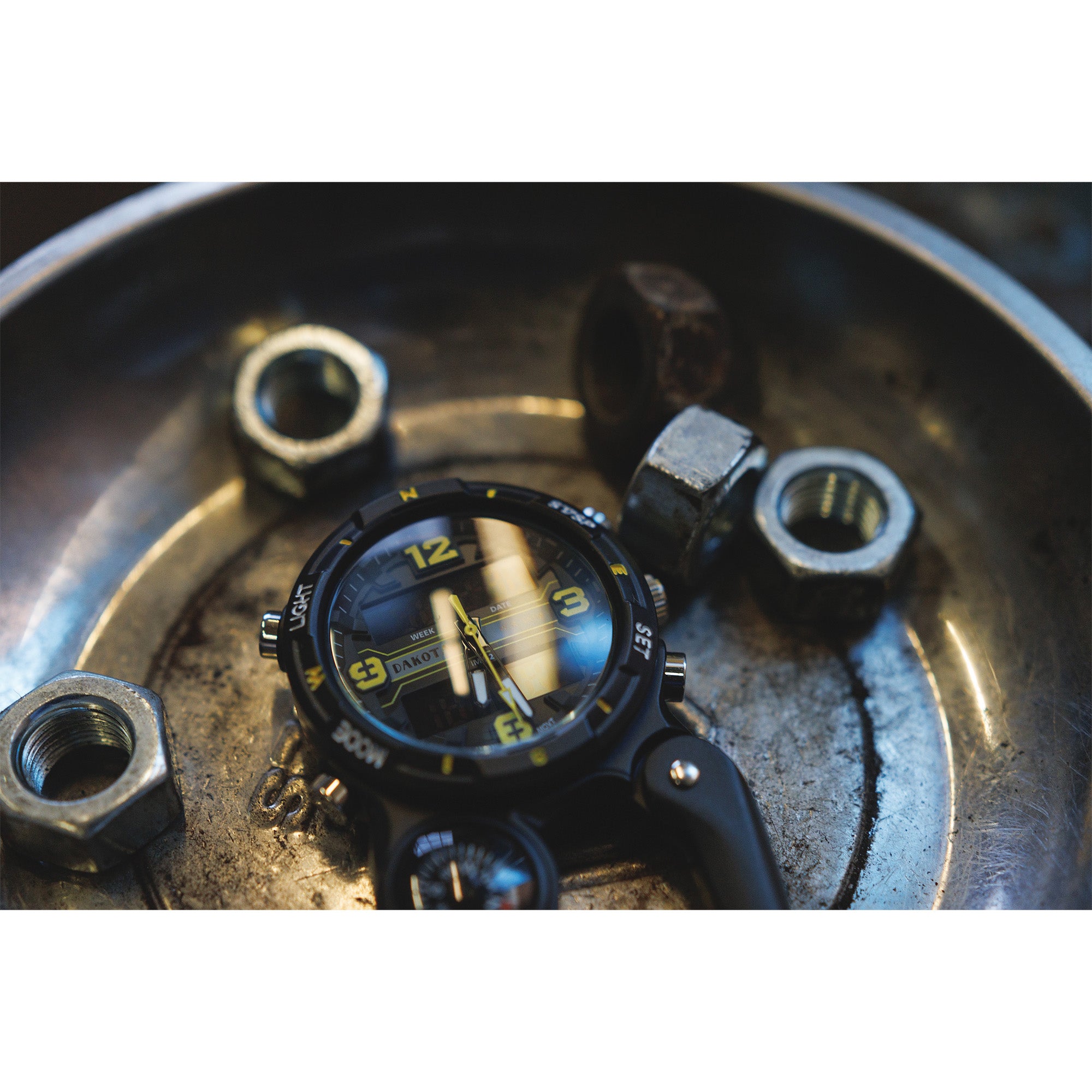
This setup is especially popular among age-group and beginner triathletes who want a dedicated, durable watch for swimming, biking, and running without investing in a premium multisport GPS unit. A simple, rugged clip-on option, like a Dakota watch or similar lightweight model, can serve as reliable timekeeping gear for triathlon athletes who prioritize function over flash.
What Makes a Watch Durable Enough for Multi-Sport Training?
Durability matters because triathlon gear endures chlorine, sweat, road vibration, and sun exposure in a single session. Look for:
-
Water resistance rated for swimming, not just splash resistance
-
Shock-resistant casing for bike vibration and transitions
-
A secure clip or strap mechanism that won't loosen mid-race
-
Legible analog-digital watch displays usable in bright outdoor light.
A lightweight watch for multi-sport endurance racing reduces fatigue over long training blocks and long-course races, where every extra gram on your wrist or bike adds up over hours of movement.
How Do Digital Stopwatches Improve Lap Pacing in Triathlon?
A digital stopwatch for lap pacing in triathlon training gives athletes immediate feedback on split times, whether that's 100-meter swim intervals, bike loop times, or running lap splits.
Why Pacing Data Changes Training Outcomes
Without lap data, athletes tend to either go out too hard or hold back unnecessarily, both of which hurt race performance. A stopwatch that tracks splits in real time lets you adjust effort mid-session rather than discovering pacing mistakes after the fact.
Choose a simple digital stopwatch if your training focuses on structured interval sets, like repeated swim lengths or bike loops. Choose a GPS-based multisport watch if you need pace data across varied, non-looped outdoor routes.
Building a Pacing Strategy Around Stopwatch Data
Track splits across multiple sessions to identify patterns, such as fading pace in later laps or inconsistent swim-to-swim times. This fact-based approach to pacing, rather than relying on perceived effort alone, helps triathletes set realistic race-day goals.
Triathlon Training Gear Essentials for Beginners
New triathletes often overspend on equipment before mastering the basics. Prioritize these triathlon training gear essentials for beginners before investing in advanced technology:
-
A reliable, waterproof timing device — whether a clip watch or wrist-worn multisport model.
-
A properly fitted wetsuit for open-water swim training.
-
A transition mat or towel to keep gear organized and visible.
-
Elastic laces for faster shoe changes in T2.
-
A race belt to avoid fumbling with safety pins mid-race.
Once these fundamentals are in place, athletes can layer in more advanced race day performance accessories for triathletes, such as aero helmets or power meters, as their training progresses.
Optimize Your Race Day Performance
Transition speed is a trainable skill, not a fixed limitation. Athletes who treat T1 and T2 with the same seriousness as their swim, bike, and run training consistently shave minutes off their total race time, often without any additional fitness gains.
Start by building a consistent transition zone gear checklist for triathletes, practice brick workouts regularly, and invest in timing gear that matches your training style, whether that's a durable clip watch for bike frame attachment or a dedicated digital stopwatch for lap pacing. Small, rehearsed improvements in the transition zone add up to meaningful gains on race day.
Frequently Asked Questions
How much time can I realistically save by improving my transitions?
Most age-group triathletes can cut one to three minutes off their total race time by organizing gear, rehearsing brick workouts, and using a dedicated timing device instead of fumbling with a phone or standard wristwatch.
What's the difference between a clip watch and a multisport GPS watch?
A clip watch attaches directly to your bike frame or gear bag and typically offers basic timing functions at a lower cost. A multisport GPS watch tracks pace, heart rate, and route data across all three disciplines but comes at a higher price point and often requires charging between uses.
Do I need expensive gear to start triathlon training?
No. Beginners can start with a waterproof stopwatch, a properly fitted wetsuit, and elastic laces. Advanced gear like aero helmets or premium GPS watches becomes more valuable as training volume and competitive goals increase.
How often should I practice brick workouts?
Most training plans recommend one brick workout per week during base training, increasing to two per week as race day approaches, particularly in the final six to eight weeks before a race.
Is a waterproof watch necessary for triathlon training?
Yes. Since triathlon includes open-water or pool swimming, any timing device used across all three disciplines needs water resistance rated for swimming, not just splash resistance, to avoid damage or data loss mid-race.